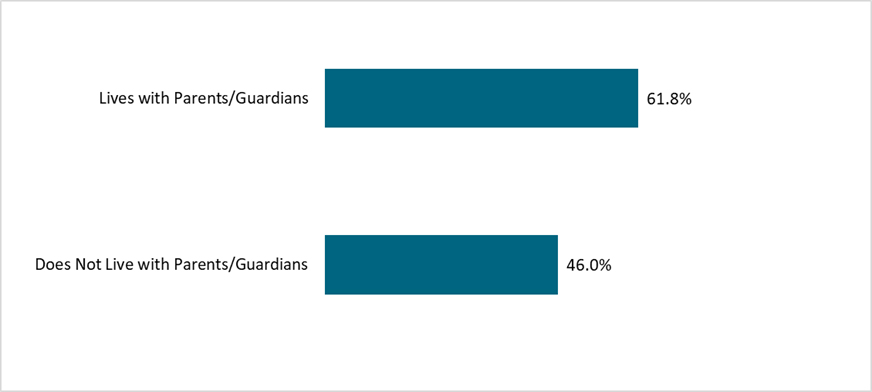
Adult Support when Depressed
Adult Support when Depressed
In the agency's efforts to improve and support the resilience of children, youth, and families in Washington, DCYF has set a goal that children and youth are supported by healthy relationships with adults. One way to measure this is by tracking the percentage of youth who report having support from adults when they are feeling sad or depressed.
In 2021, 51 percent of 10th graders who live with their parents/guardians felt they had access to adult support if they were feeling depressed. In comparison, 37.6 percent of 10th graders who do not live with their parents/guardians reported having access to an adult for support when depressed.
10th Graders with Adult Support when Depressed, by Living Situation, 2021
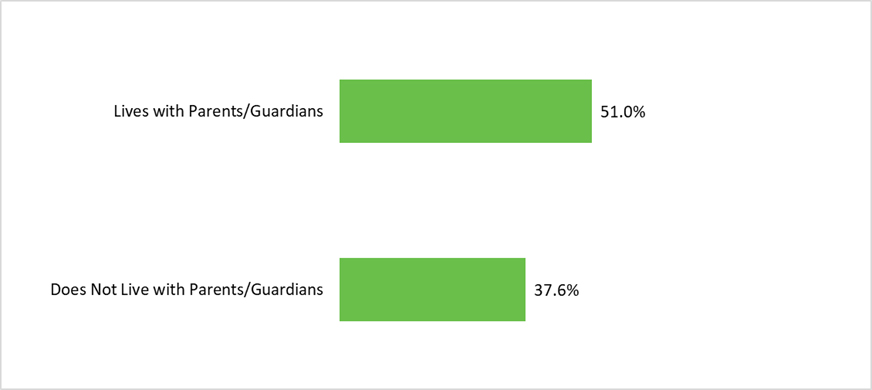
10th Graders with Adult Support when Depressed, by Living Situation, 2021