Foster Care and Mental Health
A DCYF strategic priority is to improve the quality and availability of provider services. As an outcome indicator, we are monitoring the needs and provided treatment of children and youth in foster care. Research shows that exposure to traumatic events and chronic stress - such as poverty, housing instability, family conflict, abuse and neglect, and exposure to caregivers’ mental illness or substance use disorder - contribute to the greater behavioral health needs of children and youth experiencing out-of-home care.
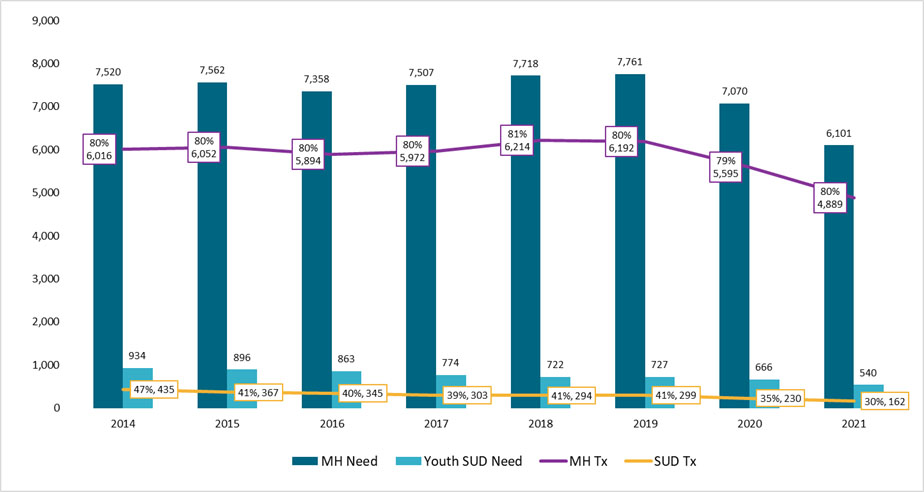
All of the numbers of children and youth needing and receiving these services have been decreasing since 2018, as the number of children and youth in foster care has decreased more generally. Treatment rates have also declined, albeit only slightly. From 2017-2019, 79-80% of foster children and youth who needed mental health treatment received it, while 2022-2024, 77% received needed mental health treatment. Similarly, from 2017-2019, 39-42% of foster youth who needed SUD treatment received it, while in 2022-2024, 38-40% received needed SUD treatment.
Needs and Treatment of Children and Youth in Foster Care, SFY 2017-2024
Needs and Treatment of Children and Youth in Foster Care, SFY 2017-2024